GEOTECHNICAL ENGINEERING1
IPSWICH
HomeInvestigationExploratory test pit

Exploratory Test Pits for Ground Investigation in Ipswich

Sound ground. Sound decisions.

LEARN MORE

The tidal influence of the Orwell and Gipping rivers shapes Ipswich's ground conditions in ways that desk studies often miss. Alluvial silts, historic mill leats, and pockets of made ground are common across the town, and a desk study alone won't tell you what's really beneath the surface. That's where an exploratory test pit comes in. Digging down to expose the strata lets our team log the soil profile directly, take undisturbed samples, and check for buried structures or soft spots that boreholes might miss. In a town where Victorian cellars and old river channels can hide beneath the pavement, an exploratory test pit gives you the ground truth before a single foundation is poured. We combine the visual record with lab testing on samples recovered from the pit, giving engineers a clear picture of bearing capacity and drainage potential across the site.

Opening a test pit in Ipswich often reveals more about the site in an hour than a week of desktop research.
Our service areas

Process and scope

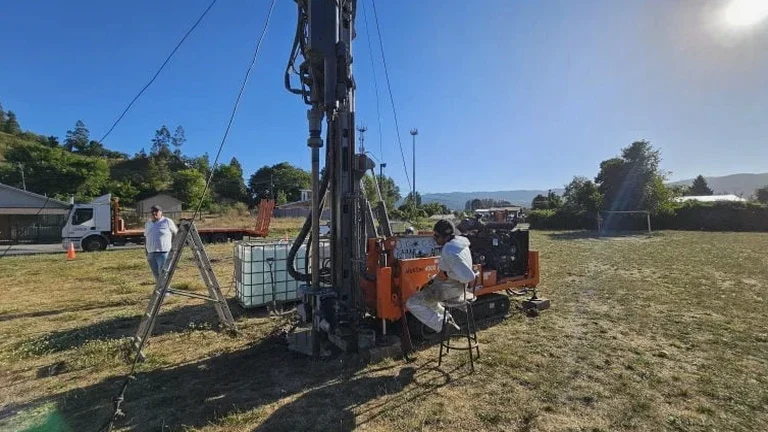
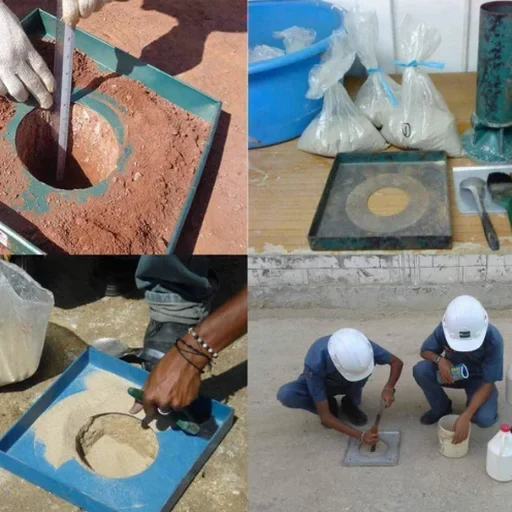
Soil conditions shift noticeably between the high ground near Christchurch Park and the low-lying redevelopment zones around the Waterfront. Up on the hill, you tend to find glacial till overlying chalk, which excavates cleanly but can hold perched water after heavy rain. Down by the marina, the profile changes to soft alluvium and industrial fill, often with timber remnants or brick rubble from Ipswich's shipbuilding past. An exploratory test pit in either setting reveals these differences within minutes of opening. We log the strata against BS 5930 descriptors, recording moisture content, consistency, and any signs of contamination that could affect concrete durability. When the ground looks marginal, we often pair the pit observations with a CPT test to extend the profile deeper without losing the visual control the pit provides. For sites where the client needs to confirm compaction of fill layers, we run a sand cone density test on the exposed surface before backfilling.
Exploratory Test Pits for Ground Investigation in Ipswich
Technical reference — Ipswich

Local considerations

From what we see on Ipswich sites, the biggest surprises come from old cellars and undocumented backfill in the town centre. An exploratory test pit often catches these before the excavator bucket finds them the hard way. A recent project near the old Cattle Market uncovered a brick vaulted cellar filled with loose ash and timber that no historical map had recorded. Without opening a pit, that void would have sat right under the proposed pad footing, and the cost to remediate after construction would have dwarfed the investigation budget. The Waterfront area carries its own risks: saturated alluvium can slump into a pit if you don't manage the groundwater, and that collapse can delay the programme. Our team arrives with pumps and trench support ready, because we know the local ground well enough to anticipate these conditions before the first spade goes in.

Need a geotechnical assessment?

Reply within 24h.

Email: contact@geotechnical-engineering1.com

Video resource

Reference standards

BS 5930:2015 + A1:2020 (Code of practice for ground investigations), Eurocode 7 (BS EN 1997-1:2004 + UK National Annex), BS 10175:2011 + A2:2017 (Investigation of potentially contaminated sites), BS 1377-9:1990 (In-situ tests)

Reference parameters

ParameterTypical value
Typical pit depth2.5 to 4.5 m (deeper with shoring)
Soil logging standardBS 5930:2015 + A1:2020
Sample types recoveredDisturbed, bulk, and block samples
Bearing capacity assessmentVisual inspection and pocket penetrometer
Typical pit dimensions1.2 m x 1.2 m to 3.0 m x 1.5 m
Backfill specificationCompacted in lifts to match surrounding density

Frequently asked questions

How long does an exploratory test pit take to excavate and log in Ipswich?

A single pit to 3.0 metres in typical Ipswich soils takes around half a day from setup to backfill. If the ground is soft and needs shoring, or if we hit obstructions that require hand digging, it can extend to a full day. We confirm the programme after reviewing the site location and any known ground risks.

What does an exploratory test pit cost in the Ipswich area?

For a standard test pit in Ipswich, you can expect a cost in the range of £440 to £590 per pit, depending on depth, access constraints, and whether shoring or groundwater control is required. The price includes excavation, logging, sampling, photographic records, and backfill compaction.

Do I need council permission to open a test pit on my Ipswich property?

In most cases, exploratory test pits fall under permitted development for site investigation, but if your site is in a conservation area or near a Scheduled Monument, you may need consent from Ipswich Borough Council. We can advise on the specific requirements once we review the site address and any planning conditions attached to your project.

How do test pits compare with boreholes for a small Ipswich site?

A test pit gives you a larger exposed face to study the soil structure, which is invaluable for logging made ground and identifying old foundations. Boreholes go deeper and are better for profiling bedrock, but they give a narrower picture. On small sites in Ipswich, we often recommend starting with a test pit because the visual access helps the engineer make faster decisions about foundation depth and drainage.

Location and service area

We serve projects in Ipswich and surrounding areas. More info.

View larger map