GEOTECHNICAL ENGINEERING1
IPSWICH
HomeSlopes & WallsActive/passive anchor design

Active and Passive Ground Anchors in Ipswich: Design and Verification

Sound ground. Sound decisions.

LEARN MORE

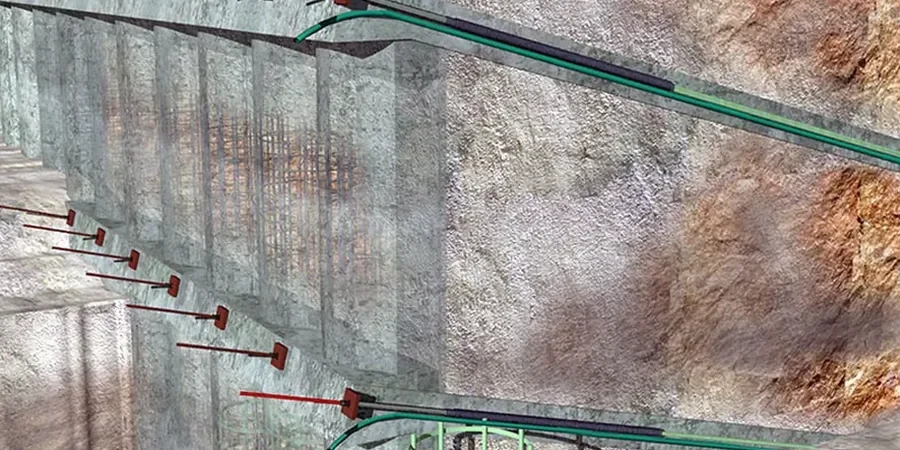
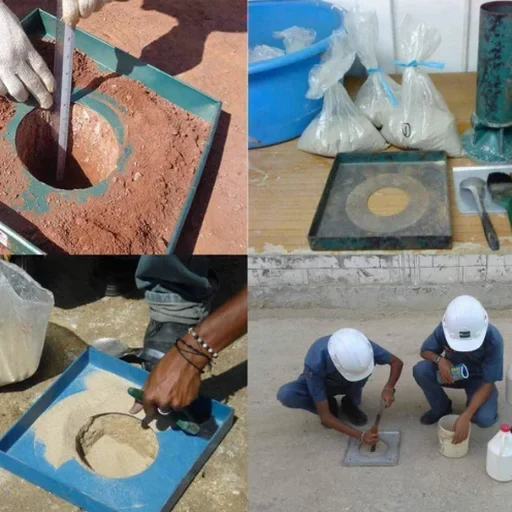
The Orwell estuary's tidal influence creates a unique groundwater regime across Ipswich. Saturated granular deposits overlying stiff clay demand rigorous anchor design. Here, the distinction between active pre-stressed tendons and passive self-drilling bars is not academic—it's a financial decision tied directly to excavation geometry. A deep basement near the Waterfront requires a different philosophy than a retaining wall in the Gipping Valley. Our technical team applies BS 8081 and Eurocode 7 principles to every scheme, ensuring the bond length is verified against the actual ground conditions encountered during drilling. For preliminary ground profiling, we often recommend reviewing data from an in-situ permeability test before finalising the anchor free length.

In Ipswich's Gault Clay, anchor bond stress rarely exceeds 350 kPa. High initial lock-off loads require a clear understanding of long-term relaxation losses.
Our service areas

Process and scope

The geological profile beneath Ipswich is dominated by the Gault Formation—overconsolidated clay with a weathered upper crust—and the overlying Kesgrave Sands and Gravels. Anchor capacity in these materials is governed by the undrained shear strength of the clay and the relative density of the granular strata. A typical active anchor in Ipswich can mobilise between 200 kN and 1,200 kN, depending on strand count and borehole diameter. Passive anchors, often Ischebeck or Dywidag hollow bars, rely on full grout encapsulation and are ideal for temporary works in the town centre. A comprehensive ground investigation, including CPT testing, helps identify the transition zones between the gravels and the stiff clay, reducing the risk of grout loss during installation.
Our design process includes a detailed assessment of the fixed anchor length. We calculate the theoretical bond stress using characteristic parameters from BS EN 1997-1:2004, applying partial factors from UK National Annex to BS EN 1997-1 (NA+A1:2014). A critical parameter is the skin friction (qs) in the bond zone—typical values range from 150 kPa to 400 kPa in Gault Clay, depending on the undrained shear strength ratio. For anchors socketed into the Crag Group sands, end-bearing components are ignored, and the design relies solely on shaft resistance.
Active and Passive Ground Anchors in Ipswich: Design and Verification
Technical reference — Ipswich

Local considerations

The expansion of Ipswich's docklands and the construction of the Orwell Bridge in 1982 reshaped the town's infrastructure footprint. Today, deep excavations adjacent to Victorian brick sewers and masonry buildings are common. The primary risk is anchor creep in the weathered Gault Clay, which can lead to progressive loss of pre-stress in active anchors. Another significant hazard is the presence of buried timber piles and quay walls from the old Wet Dock, which can obstruct inclined drilling. To mitigate this, we specify sacrificial drill bits and closely monitor flush returns for wood fragments. A sudden drop in grout take during installation often signals a connection to a void or old drainage culvert—a frequent issue in the Stoke and Holywells areas. Without proper investigation, a passive anchor can fail to engage, leaving a temporary support system critically under-reinforced.

Need a geotechnical assessment?

Reply within 24h.

Email: contact@geotechnical-engineering1.com

Reference standards

BS 8081:2015 - Code of practice for grouted anchors, BS EN 1997-1:2004 (Eurocode 7) + UK National Annex, BS EN 1537:2013 - Execution of special geotechnical works. Ground anchors, BS 5930:2015 - Code of practice for ground investigations

Reference parameters

ParameterTypical value
Design StandardBS 8081:2015 + BS EN 1997-1:2004
Typical Active Anchor Load (Strand)200 kN – 1,200 kN
Typical Passive Anchor Load (Bar)80 kN – 500 kN
Bond Stress in Gault Clay (qs)150 kPa – 400 kPa
Minimum Free Length (BS 8081)5.0 m (or 0.2H, whichever greater)
Acceptance Criteria (On-Site Test)≥ 1.25 x Design Load (Investigation Test)

Frequently asked questions

What is the cost range for anchor design and testing in Ipswich?

The fee for anchor design and testing in Ipswich typically falls between £790 and £3,060, depending on whether the project requires active or passive systems, the number of anchors, and the complexity of the acceptance testing programme.

What is the difference between active and passive anchors?

Active anchors are pre-stressed tendons that apply a direct compressive load to the structure, controlling movement from the start. Passive anchors are fully grouted bars that only engage when the ground begins to deform, making them suitable for temporary works where some movement is permissible.

How is the bond length determined in Ipswich's clay?

The fixed anchor length is calculated using the characteristic skin friction derived from site-specific ground investigation data. In Gault Clay, we apply the undrained shear strength profile and a correlation factor per BS 8081 to ensure the grout-to-ground bond is not exceeded.

What acceptance tests are mandatory for ground anchors?

BS 8081 and BS EN 1537 mandate three test types: investigation tests to validate the design bond, suitability tests on sacrificial anchors, and acceptance tests on every production anchor. The acceptance criteria require the anchor to sustain 125% of the design load with minimal creep over a defined period.

Location and service area

We serve projects in Ipswich and surrounding areas.

View larger map