GEOTECHNICAL ENGINEERING1
IPSWICH
HomeFoundationsPile foundation design

Pile Foundation Design in Ipswich: Ground Truth from Local Testing

Sound ground. Sound decisions.

LEARN MORE

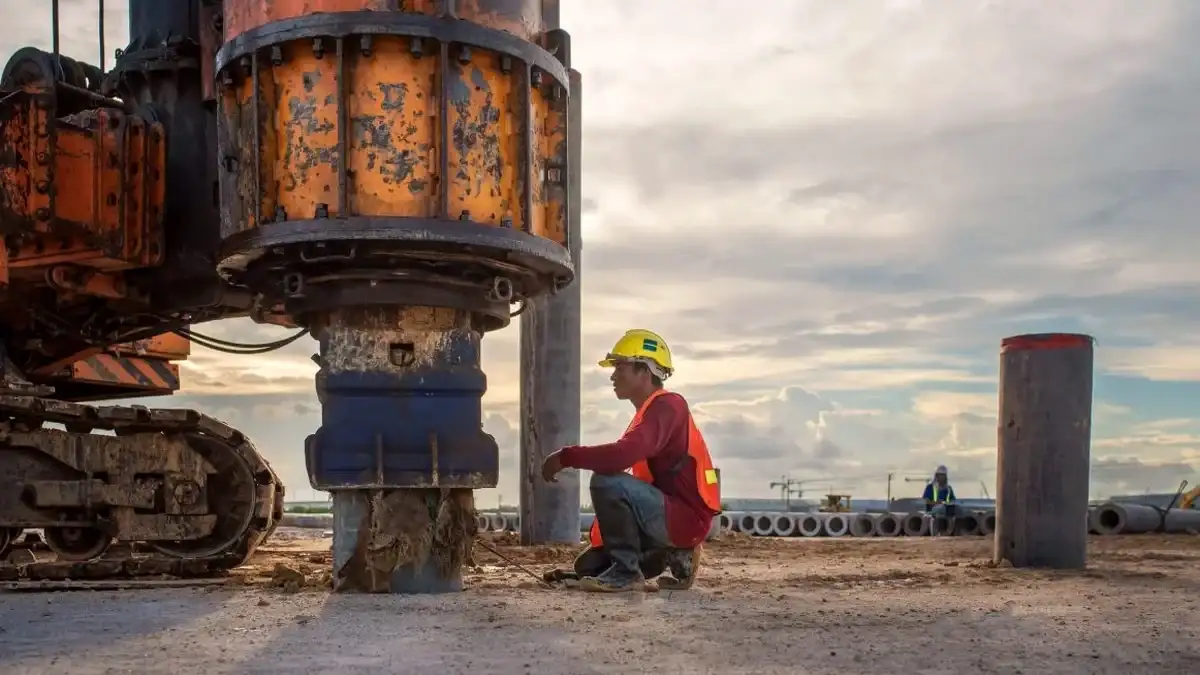
The rotary rig is set up on a tight infill plot off Bramford Road, pulling up stiff boulder clay with pockets of running sand. In Ipswich that mix is common. We see it from the Chalk outcrops north of the town down to the alluvial silts along the Orwell. The rig runs a continuous flight auger through the upper drift, then we switch to coring once we hit the Crag or the underlying Chalk. Every metre we log the cuttings, the torque, and the return flush. That data feeds straight into the pile design. A single borehole isn't enough here. We cross-check the driller's log with in-situ tests and lab classification. For piled foundations in Ipswich we typically run CPT soundings alongside the boreholes to pick up loose lenses that auger cuttings miss. And where the cover is thin over Chalk we use test pits to inspect the rockhead directly before choosing a socket length.

The shaft resistance you count on in August can be half that value by February if you haven't tested the till at its wettest.
Our service areas

Process and scope

East Anglia's dry summers and wet winters create a shrink-swell cycle in the London Clay and the overlying drift that many designers underestimate. In Ipswich the Gipping valley introduces a second variable: groundwater that rises fast after autumn rain, softening the base of the glacial till. We've pulled up samples from the same borehole in July and January that show a 40 kPa drop in undrained shear strength, purely from seasonal moisture change. That matters for pile design because the shaft resistance you count on in summer may not be there in February. Our lab runs drained and undrained triaxial tests on Shelby tube samples from each strata, and we back-calculate the adhesion factor alpha from the CPT sleeve friction. When the ground profile shows soft alluvium over stiff till we often size the pile to transfer load below the water-sensitive zone, then recommend a footing inspection for the pile cap to ensure the shallow bearing layer hasn't been disturbed by previous site stripping.
Pile Foundation Design in Ipswich: Ground Truth from Local Testing
Technical reference — Ipswich

Local considerations

Sites near the docks and along the Orwell floodplain behave completely differently from the chalk slopes up towards Christchurch Park. Down by the wet dock the alluvium is 6 to 8 metres of soft organic silt. Piles driven through that layer can lose lateral support during installation, and the organic content attacks ordinary Portland cement if you use cast-in-place concrete without sulphate-resisting cement. We've cored piles on a quay extension where the upper 3 metres of concrete had turned to mush in under ten years. On the north side of town, where the Chalk is shallow, the risk flips: flint bands deflect CFA augers, creating a bore larger than the pile diameter, and then groundwater washes the annulus. The pile ends up with a reduced shaft over the top few metres. Both scenarios are avoidable with the right ground investigation. The key is logging the sulphate content and the flint frequency before the piling contractor mobilises.

Need a geotechnical assessment?

Reply within 24h.

Email: contact@geotechnical-engineering1.com

Reference standards

BS EN 1997-1:2004 (Eurocode 7: Geotechnical design – General rules), BS EN 1997-2:2007 (Ground investigation and testing), BS 5930:2015 (Code of practice for ground investigations), BS EN ISO 22475-1:2006 (Sampling methods and groundwater measurements), BS 8004:2015 (Code of practice for foundations)

Reference parameters

ParameterTypical value
Borehole depth for pile design20–40 m below ground level, depending on Chalk depth
CPT cone penetration rangeUp to 25 m in drift; refusal on flint bands in Chalk
Lab test suiteTriaxial (CIU/CAU), oedometer, Atterberg limits, sulphate content on Chalk
Pile type typically assessedCFA, driven precast, bored cast-in-place with temporary casing
Design standardBS EN 1997-1:2004 + UK National Annex
Ground model layersMade ground → Alluvium → Glacial Till → Crag → Chalk
Sample quality classClass 1 to Class 4 per BS EN ISO 22475-1

Frequently asked questions

What does a pile foundation design package cost for a typical Ipswich residential plot?

For a single dwelling with two boreholes, CPT soundings, lab testing, and a design report compliant with BS EN 1997-1 the cost ranges from £1.380 to £4.550 depending on access constraints and the depth to the bearing stratum. Sites in the Gipping valley that need deeper investigation through soft alluvium fall at the upper end.

Which pile type works best in Ipswich's glacial till?

CFA piles are the most common choice because they install quickly through the stiff till without generating spoil at surface. The till is generally dense enough to provide good shaft resistance, but the design must account for the water-softened zone in the upper 2 to 3 metres that we measure in winter. Where the till is thin and the Crag is within 10 metres, driven precast piles often achieve a more reliable set.

How many boreholes are needed for a pile design in Ipswich?

BS 5930 recommends a minimum of three investigation points for a building footprint, but in Ipswich the number depends on the variability of the drift. On a flat site with uniform till two boreholes plus one CPT sounding can be adequate. On a sloping site near the Orwell or in the Chalk valleys we usually recommend three boreholes with CPT at each location to capture the lateral variation in the rockhead and the alluvium thickness.

Do you test for sulphate attack on pile concrete in Ipswich?

Yes, every time. The alluvium along the Orwell corridor and the backfilled docks contain enough organic matter and sulphate to degrade ordinary Portland cement within a decade. We run water-soluble sulphate tests on groundwater samples and total sulphur on soil specimens from each strata, then specify the concrete mix and cement type per BRE Special Digest 1.

Location and service area

We serve projects in Ipswich and surrounding areas.

View larger map