GEOTECHNICAL ENGINEERING1
IPSWICH
HomeRoadwayRigid pavement design

Rigid Pavement Design for Ipswich’s Gault Clay and River Terraces

Sound ground. Sound decisions.

LEARN MORE

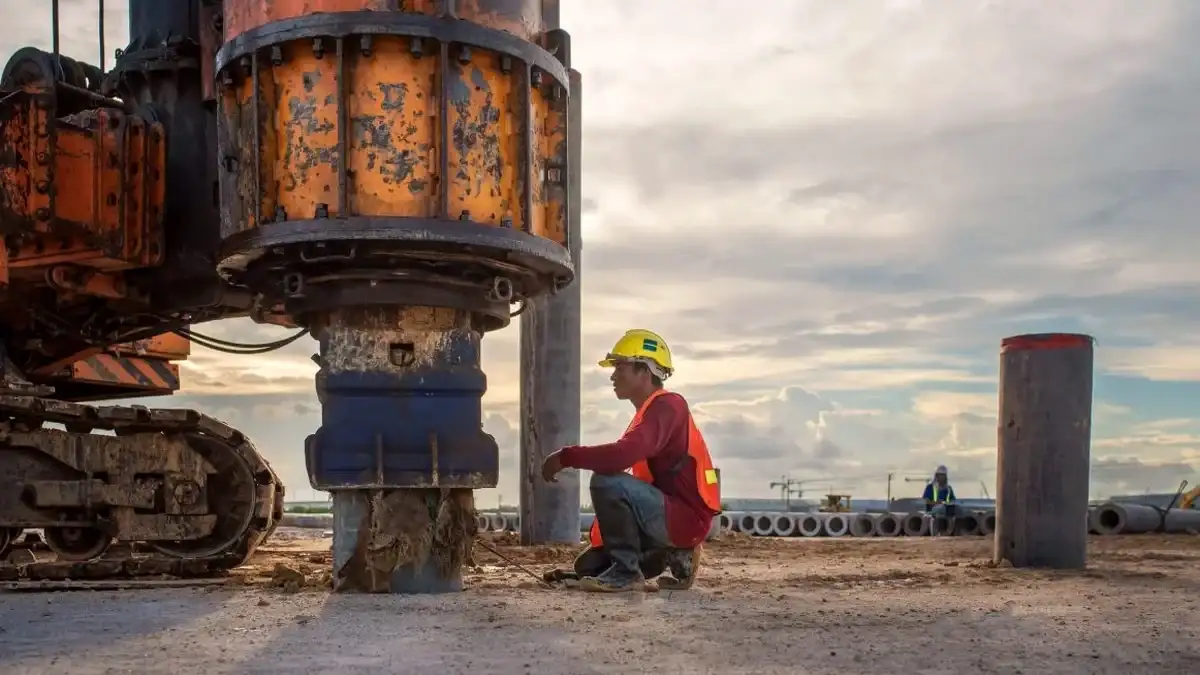
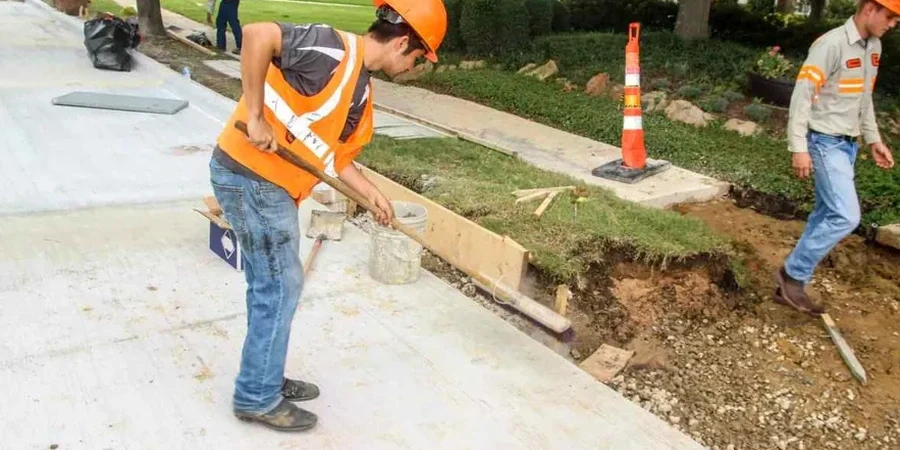
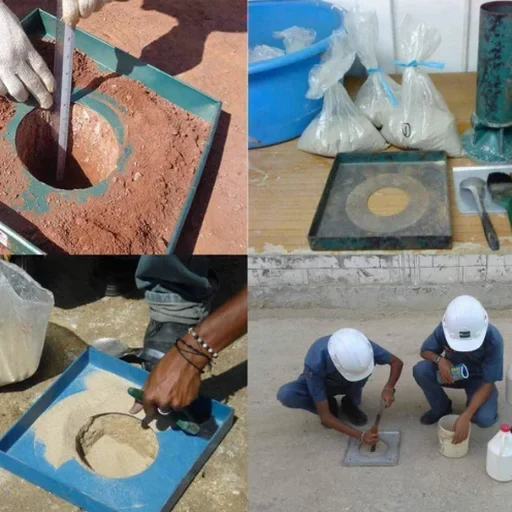
Setting out a rigid pavement job in Ipswich starts with the slipform paver—a long-track machine that extrudes the concrete slab in a single pass. Our team watches the dowel bar inserter closely as it punches steel into the plastic mix before the paver moves forward, because alignment here matters more than on most sites. Ipswich sits on a patchwork of Gault Clay and river terrace gravels along the Orwell, and that means subgrade stiffness can shift within the length of a single pour. We tie the paver’s pace to the results from a plate load test run at centreline and edge positions, so the modulus of subgrade reaction we feed into Westergaard’s equations reflects what the drum actually rides over. When the ground dips into soft alluvium near the wet docks, we cross-check with a CBR survey to ensure the concrete slab thickness stays within the fatigue life we promised the client.

A rigid pavement on Gault Clay that ignores seasonal moisture cycling will show corner cracks before the defects liability period ends.
Our service areas

Process and scope

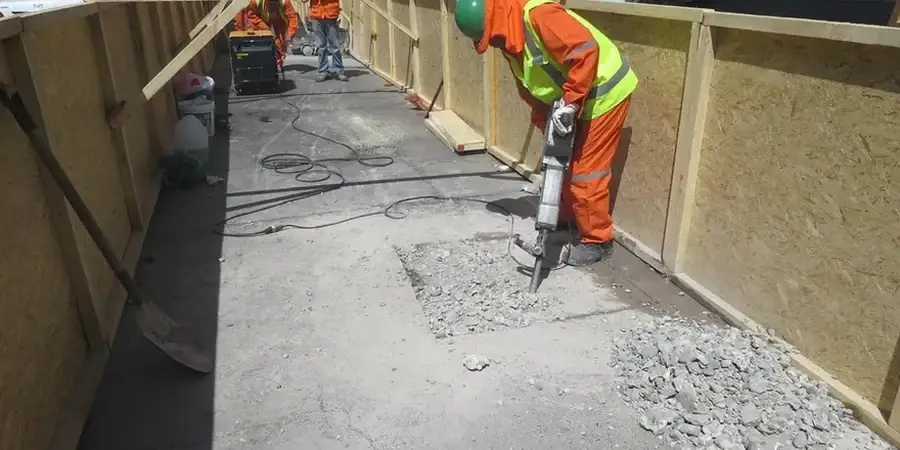
BS EN 1997-1:2004 governs every rigid pavement we design in Ipswich, and its emphasis on serviceability limit states fits the local geology uncomfortably well. Gault Clay is notorious for long-term shrinkage and swelling cycles, and a jointed concrete slab laid directly on it can pump fines at the transverse joints within three winters if the base course drains poorly. We specify a minimum CBR of 5% for the capping layer under Annex B of the DMRB, but on the Chalky Boulder Clay that caps the hills north of town we often get values above 12%, which lets us reduce slab thickness while keeping the curling stress ratio below 0.25. Temperature gradients across the slab depth drive a lot of the reinforcement detailing: we model the non-linear gradient using the AASHTO 93 equation adapted to UK solar radiation data, because a slab poured on a crisp October morning in Ipswich behaves differently from one cast during a July heatwave on the A14 widening. The in-situ permeability of the subgrade dictates whether we need a cement-bound base or a free-draining granular layer, and in the valley bottom around the Gipping we almost always do.
Rigid Pavement Design for Ipswich’s Gault Clay and River Terraces
Technical reference — Ipswich

Local considerations

Ipswich recorded a 4.6 magnitude earthquake in 1884 that cracked chimneys across East Anglia, and while the return period is long, rigid pavements are brittle enough that differential settlement from a seismic event can open joints beyond the sealant’s working range. The bigger day-to-day risk on the 130,000-population town’s industrial roads is water. The Orwell estuary pushes a saline water table up through the terrace gravels, and chloride ions attack the dowel bars from below if the plastic sheath gets nicked during installation. On the Ransomes Europark expansion, we saw joint spalling within eight years because the contractor omitted the epoxy coating on the tie bars—the chloride had travelled along the aggregate-cement interface and rusted the steel until it expanded and popped the concrete. We now specify stainless-clad dowels for any rigid pavement within 500 metres of the tidal reach, and we always run a sulfate test on the groundwater because the London Clay formation that underlies the Gault at depth contains enough pyrite to produce sulfate concentrations above the BRE SD1 Class 3 threshold.

Need a geotechnical assessment?

Reply within 24h.

Email: contact@geotechnical-engineering1.com

Reference standards

BS EN 1997-1:2004 – Geotechnical design, BS 5930:2015+A1:2020 – Code of practice for ground investigations, DMRB CD 225 – Design for new pavement construction, BRE Special Digest 1 – Sulfate attack on concrete

Reference parameters

ParameterTypical value
Design standardBS EN 1997-1:2004 + DMRB CD 225
Slab thickness range180 mm – 310 mm
Modulus of subgrade reaction (k-value)20 MPa/m – 80 MPa/m
Concrete flexural strength (28-day)4.5 MPa – 5.5 MPa
Joint spacing (unreinforced)4.0 m – 5.5 m
Dowel bar diameter and spacing25 mm – 32 mm at 300 mm centres
Tie bar specification16 mm high-yield deformed bar, 900 mm long
Base course typeCBM Category B or unbound Type 1 with geotextile separator

Frequently asked questions

How much does rigid pavement design cost for a typical industrial yard in Ipswich?

For a standard industrial yard or access road in the Ipswich area, the design fee typically falls between £1.530 and £5.450, depending on the area of pavement, the number of plate load tests required, and whether we need to model temperature gradients for a heavily jointed layout. A simple single-span access road with straightforward ground conditions sits at the lower end; a large distribution-centre yard with multiple loading bays, complex drainage, and sulfate-bearing subgrades moves toward the upper end.

Why does Gault Clay cause so many problems for concrete pavements in Ipswich?

Gault Clay has a high plasticity index and a significant shrink-swell potential that changes with the seasons. Under a rigid pavement, the moisture content of the clay can increase over time because evaporation is blocked, leading to heave at the slab edges. If the joints are not designed to accommodate this movement, the corners of the slab lose contact with the subgrade and traffic loads then cause progressive cracking. We manage this by specifying a minimum cover over the clay and using a cement-stabilised base to bridge the weaker zones.

What joint sealant performs best on Ipswich’s industrial estate roads?

We specify hot-poured, polymer-modified bituminous sealant conforming to BS EN 14188-1 for most rigid pavement joints in Ipswich. The material needs to remain flexible at the low temperatures we get on winter mornings near the Orwell, while resisting fuel spillage from trucks. For joints exposed to standing water—common on the flatter sections of the Ransomes Europark—we switch to a two-part cold-applied polysulfide that bonds better to damp concrete.

Location and service area

We serve projects in Ipswich and surrounding areas.

View larger map