GEOTECHNICAL ENGINEERING1
IPSWICH
HomeUnderground ExcavationsGeotechnical analysis for soft soil tunnels

Geotechnical Analysis for Soft Ground Tunnelling in Ipswich

Sound ground. Sound decisions.

LEARN MORE

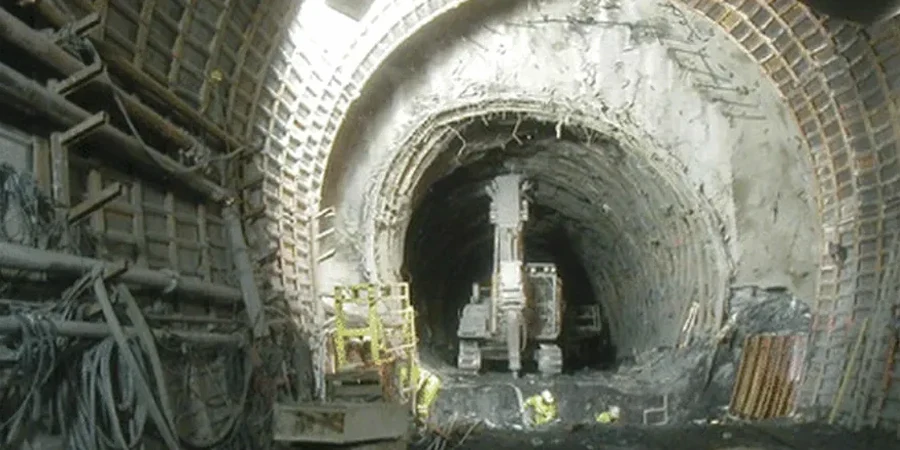
If you compare the heavy London Clay that caps the northern fringes of Ipswich with the soft alluvial silts and peats that line the River Gipping corridor to the south, you are looking at two entirely different tunnelling challenges within the same town. A drive that starts in stiff, overconsolidated material can, within a few hundred metres, encounter waterlogged, highly compressible ground where face stability becomes the primary concern. Having run laboratory programmes on samples from both the Chalk outcrops near Holywells Park and the river terrace gravels around the Wet Dock, our team understands that a single borehole log cannot tell the full story. A proper soft ground tunnel analysis in Ipswich integrates high-quality sampling with advanced triaxial testing to model the undrained behaviour of the Gipping's recent deposits, giving the contractor a realistic picture of settlement and ground loss before the TBM even enters the launch pit.

In Ipswich, the transition from Crag Sand to London Clay can occur within a single tunnel ring—getting the interface strength wrong is the difference between controlled settlement and a surface depression in Foundation Street.
Our service areas

Process and scope

With a population approaching 140,000, Ipswich sits at the tidal limit of the River Orwell, where the water table often lies barely two metres below ground level in the central areas. This high groundwater, combined with the interbedded nature of the Crag Group sands and the overlying glacial tills, creates a tunnelling environment where face pressures must be calibrated to an unusually tight window. Our laboratory programme for soft ground analysis in Ipswich focuses on quantifying two parameters that the local geology makes critical: the small-strain stiffness of the Lambeth Group clays, which controls settlement trough width, and the permeability anisotropy of the Thanet Sand Formation, which dictates the dewatering strategy. We run multistage triaxial tests under BS EN 1997-2 procedures, measuring effective stress paths that reflect the actual stress relief a tunnel excavation will induce. For the fibrous peats encountered in the floodplain, we supplement standard classification with organic content determination, because even a thin peat lens can generate long-term creep settlements that standard elastic models miss entirely.
Geotechnical Analysis for Soft Ground Tunnelling in Ipswich
Technical reference — Ipswich

Local considerations

The British Geological Survey maps for the Ipswich district show a buried channel of the River Gipping filled with up to 25 metres of soft Holocene sediment directly overlying the Chalk aquifer. When a tunnel alignment intersects this channel, the risk is not just face instability—it is the potential for a hydraulic connection between the tunnel excavation and the regionally important Chalk aquifer, which supplies much of the town's water. A blow-in at the face can propagate to the surface in minutes in these conditions. Our analysis quantifies the hydraulic gradient across the tunnel face for the full tidal cycle of the Orwell, because the 3.5-metre tidal range at Ipswich Wet Dock creates a fluctuating pore pressure regime that standard steady-state models ignore. We also test for the presence of flint bands within the Chalk, which can cause excessive cutter wear and require a different conditioning strategy for the spoil; a parameter often overlooked until the TBM advance rate drops and the programme slips.

Need a geotechnical assessment?

Reply within 24h.

Email: contact@geotechnical-engineering1.com

Reference standards

BS 5930:2015 – Code of practice for ground investigations, BS EN 1997-1:2004 (Eurocode 7) – Geotechnical design, general rules, BS EN 1997-2:2007 – Ground investigation and testing, BS 1377 – Methods of test for soils for civil engineering purposes

Reference parameters

ParameterTypical value
Undrained shear strength (su) of soft alluvium15 to 40 kPa, determined via CIUC triaxial per BS 1377: Part 8
Small-strain shear modulus (Gmax) of London ClayMeasured with bender elements at in-situ stress state
Permeability of Thanet Sand (kv/kh ratio)Anisotropy ratio typically 1:3 to 1:10, constant head testing
Compression index (Cc) of Holocene peat2.5 to 4.8, one-dimensional oedometer per BS EN 1997-2
Residual friction angle of Chalk puttyRing shear testing, φ'r typically 28°–32° for remoulded material
Stand-up time in laminated Crag SandEstimated from relative density and silt content, typically 2–8 hours unsupported
Swelling pressure of Gault Clay (where present at depth)Up to 200 kPa, measured in CRS oedometer cells

Frequently asked questions

How do you sample the soft alluvium in Ipswich without disturbing it for lab testing?

We use thin-walled piston samplers or triple-tube core barrels with plastic liners, pushed at a controlled rate through the soft silts and peats. For the Crag Sands, which are notoriously difficult to sample, we often rely on in-situ CPT correlation calibrated against a limited number of high-quality undisturbed samples taken with a fixed-piston sampler under drilling mud support.

What is the typical cost range for a soft ground tunnel geotechnical analysis in Ipswich?

Depending on the length of the alignment and the number of boreholes required to characterise the variability of the Gipping deposits, a comprehensive laboratory programme for tunnel design in Ipswich typically ranges from £3,270 to £13,840. The final figure depends on the number of triaxial stress-path tests, oedometer consolidation tests, and the extent of chemical testing needed for the groundwater.

Can you model the settlement trough in Ipswich's layered soils accurately?

The reference range for this service in Ipswich is £3.270 - £13.840. The final price depends on the project scope and volume.

How do you account for the tidal influence on tunnel face stability near the Orwell?

We install vibrating wire piezometers in the boreholes and log pore pressure over a full spring-to-neap tidal cycle. The data is used to calibrate a transient groundwater model. The laboratory programme then tests the soil at the effective stress corresponding to the low-tide condition, which is the critical design case for face stability, rather than assuming a static average water table.

Location and service area

We serve projects in Ipswich and surrounding areas.

View larger map