GEOTECHNICAL ENGINEERING1
IPSWICH
HomeIn-Situ TestingField permeability test (Lefranc/Lugeon)

Field Permeability Testing (Lefranc/Lugeon) in Ipswich

Sound ground. Sound decisions.

LEARN MORE

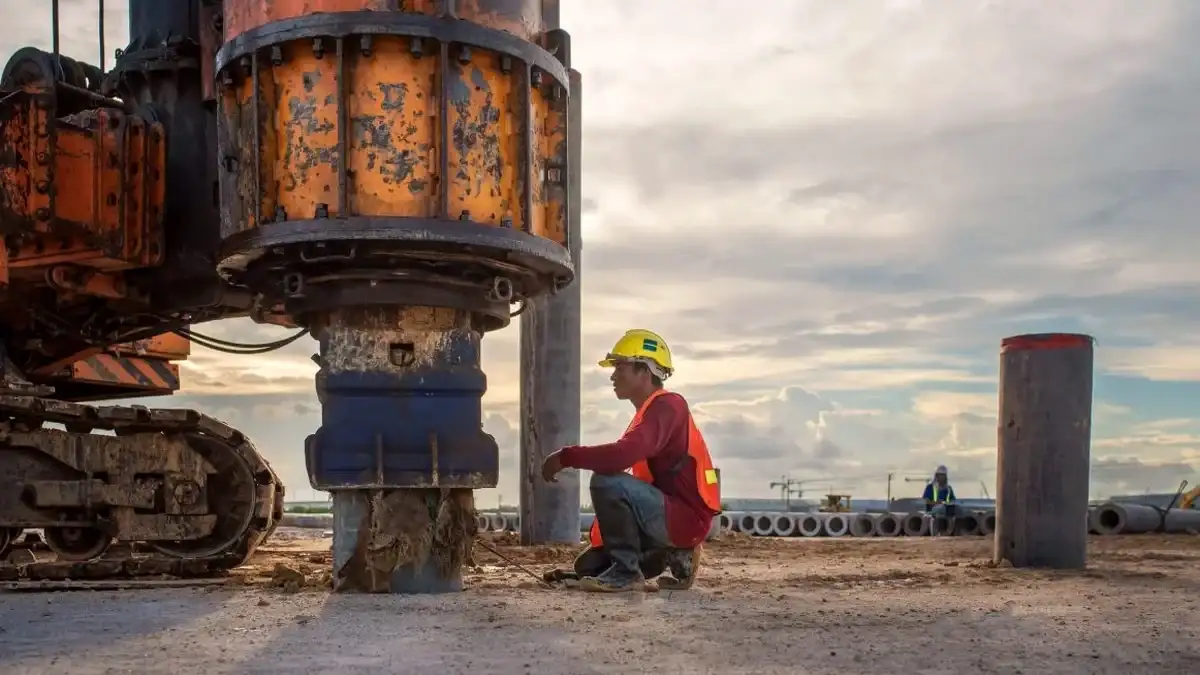
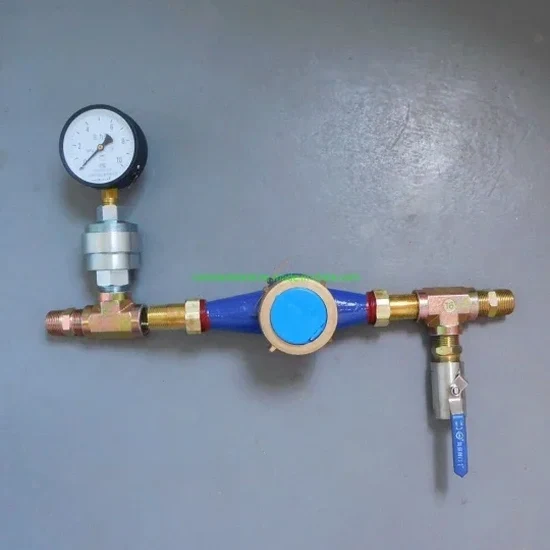
Setting up the double-packer assembly inside a flushed borehole, our technicians rely on a calibrated pressure gauge and flow meter to capture the precise injection rate that defines the Lugeon pattern. In Ipswich, where the shallow strata alternate between Kesgrave Sands, London Clay outcrops, and Gipping Valley alluvium, packer seating depth becomes the critical variable — a misjudged seal in a sandy lens renders the test invalid. We run the five-pressure-step cycle while continuously logging flow versus time, because the transient response often reveals hydraulic fracturing thresholds that a single-stage falling-head test would miss. For deeper boreholes, the Lefranc method with an uncased pocket provides point measurements in soil, and we often complement the readings with a grain-size analysis on recovered cuttings to cross-check the permeability range deduced from Hazen’s correlation.

A five-step Lugeon test reveals hydraulic fracturing pressure — critical data for grouting design in Ipswich's variable glacial till.
Our service areas

Process and scope

BS 5930:2015+A1:2020 and the hydrogeological provisions of Eurocode 7 (BS EN 1997-2:2007) govern every test we execute in Ipswich, and the local hydrogeology makes strict adherence non-negotiable. The River Orwell tidal influence and the perched water tables trapped above the London Clay create a layered flow regime where a single Lugeon value averaged over the entire test interval can be dangerously misleading — we therefore isolate short 1.5 m to 3 m sections and report packer-inflation pressure alongside the transmissivity estimate. When the ground investigation targets foundation drainage or cut-off wall performance, the Lefranc variable-head procedure yields a direct k-value for the soil horizon, and we often recommend pairing it with a cpt-test to detect thin high-permeability stringers that a standard borehole log might overlook. In chalky-till areas west of the town centre, where the matrix permeability is low but secondary fracture flow dominates, the Lugeon test reveals the true hydraulic behaviour that informs dewatering design. For sites near the Gipping floodplain, we also draw on insights from slope-stability assessments to ensure that elevated pore pressures identified during the permeability campaign are properly accounted for in the stability analysis of riverbank excavations.
Field Permeability Testing (Lefranc/Lugeon) in Ipswich
Technical reference — Ipswich

Local considerations

The most persistent mistake we see in Ipswich is treating a single falling-head test in a site investigation borehole as representative of the entire geological column. A contractor drills through London Clay into the underlying Crag Sand, runs one Lefranc test at the base, and then designs the dewatering system assuming that low-permeability clay governs the excavation behaviour. The Crag is an aquifer — water enters the excavation through the unscreened borehole annulus, and the resulting blow-out or base heave stops work for weeks. Another recurrent issue arises when Lugeon tests skip the low-pressure steps and jump directly to 1 MPa, masking the onset of hydro-fracturing in weathered chalk; the reported Lugeon value then overestimates the rock mass permeability by an order of magnitude, and the grouting programme specified from that data fails to seal the fractures effectively. We prevent these outcomes by logging packer-seat integrity with a downhole camera and by refusing to accept test intervals that show casing leakage.

Need a geotechnical assessment?

Reply within 24h.

Email: contact@geotechnical-engineering1.com

Reference standards

BS 5930:2015+A1:2020 — Code of practice for ground investigations, BS EN ISO 22282-2:2012 — Geotechnical investigation and testing. Geohydraulic testing. Water permeability tests in a borehole using open systems, BS EN 1997-2:2007 — Eurocode 7: Geotechnical design. Ground investigation and testing, UK Specification for Ground Investigation (ICE, 2nd edition)

Reference parameters

ParameterTypical value
Test method (soil)Lefranc — constant or variable head in uncased borehole pocket
Test method (rock)Lugeon — five-pressure-stage packer test in NX/HQ borehole
Applicable strata in IpswichKesgrave Sands, London Clay, chalky till, Gipping alluvium, Crag Group sands
Packer typePneumatic single or double packer, 1.5–3.0 m test interval
Measurement standardBS 5930:2015+A1:2020, BS EN ISO 22282-2:2012, BS EN 1997-2:2007
Reporting outputLugeon value (Lu), hydraulic conductivity k (m/s), transmissivity, flow-vs-pressure plots
Typical test depth range3 m to 80 m below ground level, depending on borehole stability

Frequently asked questions

How much does a Lugeon or Lefranc permeability test cost in Ipswich?

The cost for a field permeability testing programme in Ipswich typically ranges from £490 to £920 per test interval, depending on borehole depth, number of pressure stages, and whether the borehole requires re-drilling or conditioning before the packer can be seated. Mobilisation and data interpretation are quoted separately based on the number of tests and the complexity of the ground model.

Which test is better for the London Clay — Lefranc or Lugeon?

The Lefranc method is the standard choice for London Clay because it measures permeability in a short, uncased pocket of soil, capturing the low hydraulic conductivity typical of stiff, overconsolidated clays. A Lugeon test would not be appropriate — it is designed for fractured rock, and injecting water under pressure into clay would simply fracture the material, giving an unrepresentative result.

How long does a field permeability test take on site in Ipswich?

A single Lugeon test with five pressure stages takes approximately 90 to 120 minutes once the packer is seated at the correct depth, including the time to observe steady flow at each stage. A Lefranc variable-head test is faster — typically 30 to 45 minutes per interval — but the total site time depends on how many intervals are tested and the borehole condition.

Can you carry out permeability testing in the Gipping Valley alluvium?

Yes. The alluvial sands and gravels of the Gipping Valley are highly permeable, and Lefranc testing works well provided the borehole is stable. In loose, collapsing ground we may need to use a slotted casing with a filter pack, or switch to a piezometer-based falling-head test, to obtain reliable hydraulic conductivity values.

Location and service area

We serve projects in Ipswich and surrounding areas.

View larger map