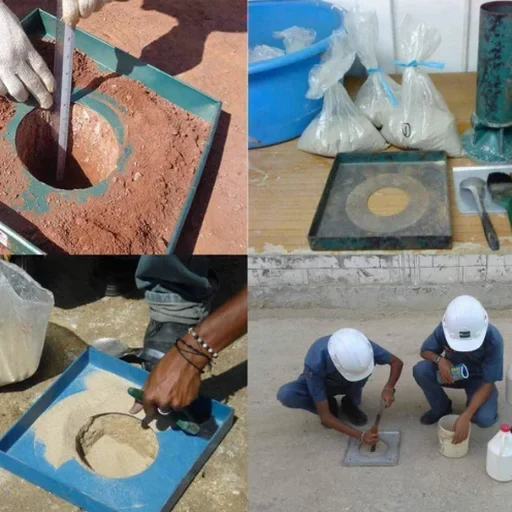
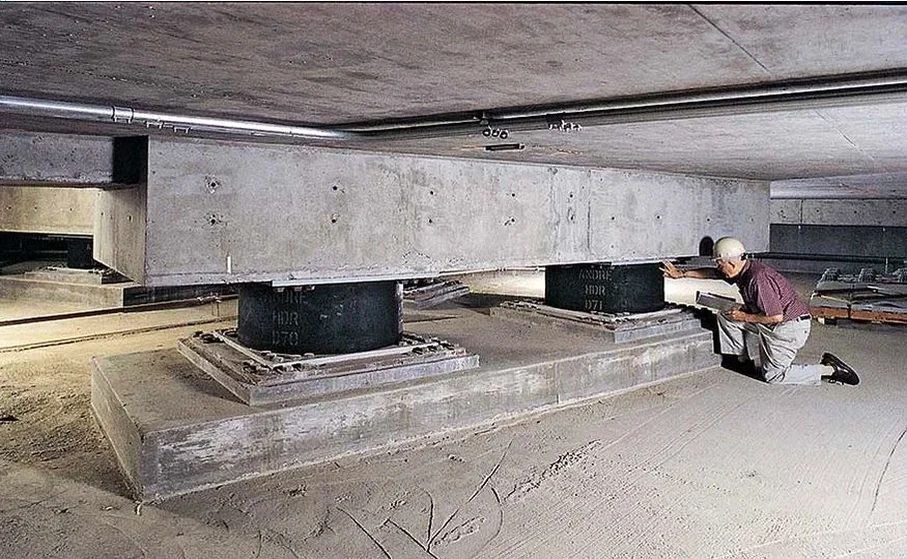
Ipswich sits on a complex Quaternary geology that masks a deeper seismic reality. The 1884 Colchester earthquake, estimated at magnitude 4.6, generated intensities of VI EMS across parts of Suffolk and reminds us that stable cratons still accumulate intraplate stress. Our laboratory team processes the input parameters required for effective base isolation seismic design in Ipswich: shear wave velocity profiles from the Crag Group sands, dynamic stiffness degradation curves for London Clay, and site-specific response spectra that reflect the 15-25 metre thickness of superficial deposits overlying the chalk. Every isolator specification depends on ground motion inputs that cannot be copied from generic UK hazard maps because local basin-edge effects and impedance contrasts between the Thanet Sand and Chalk formations modify the frequency content. We run resonant column tests, cyclic triaxial suites, and bender element measurements to build the stiffness and damping matrices that structural engineers need.
Effective base isolation in Ipswich hinges on site-specific modulus reduction and damping curves at strains from 10⁻⁶ to 10⁻², not on generic EC8 spectra.