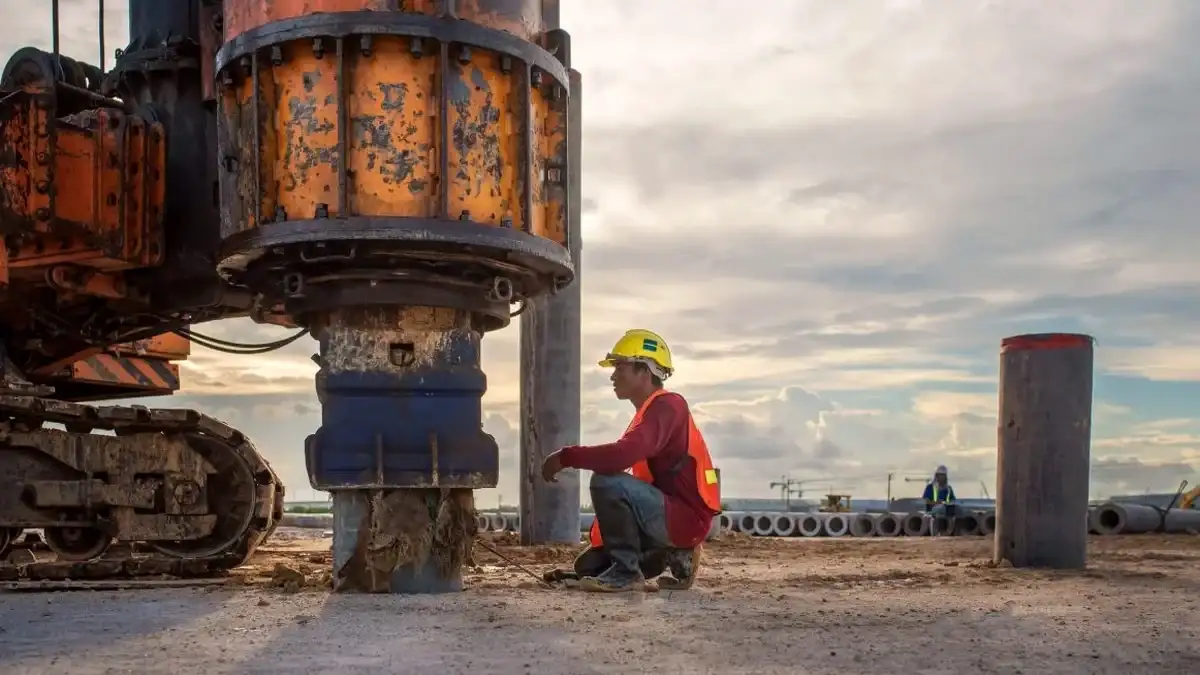
The assessment starts with the cone penetration test rig arriving on site, its hydraulic rams pushing a 15 cm² cone through the soft alluvium that lines the River Gipping. In Ipswich, these saturated silts and fine sands can extend 8 to 14 metres deep before hitting the underlying London Clay and Crag Group strata. The team logs cone tip resistance and sleeve friction in real time, directly feeding data into the cyclic stress ratio calculations required by BS EN 1998-5. We also deploy an automatic SPT hammer on a tracked rig when access allows, retrieving split-spoon samples from depths where the normalized blow count may fall below 15. This dual-method approach provides the grain-size distribution and fines content needed to confirm whether a soil is truly susceptible to flow liquefaction or cyclic mobility under the seismic design scenario for Suffolk.
A factor of safety below 1.1 in loose alluvial sands means post-liquefaction settlement can exceed 100 mm, even at moderate PGA values of 0.10g.