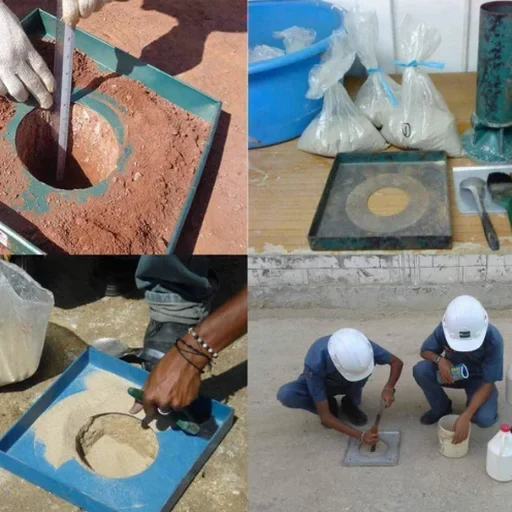
The Casagrande cup sits on the bench, its brass bowl polished from thousands of drops. In our Ipswich laboratory, determining the Atterberg limits begins with drying the sample at 60°C—a process that takes longer with the silty clays we often receive from the Gipping Valley alluvium. The sample is then sieved through a 425-micron mesh, mixed with distilled water, and worked into a paste. The liquid limit test requires precisely 25 blows to close a standard groove, a procedure our technicians repeat until three consistent readings are obtained. The plastic limit follows, rolling threads to 3mm diameter until they crumble. Together, these two values define the plasticity range of the soil, a fundamental parameter for classifying cohesive materials across construction sites in Ipswich.
The plasticity index of Ipswich alluvial clays often shifts by 8 to 12 points between summer and winter sampling—seasonal moisture history is not a footnote, it is the data.